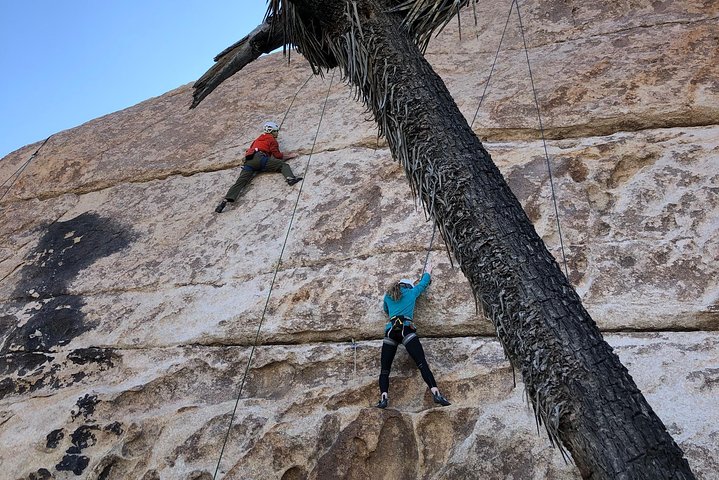
You step out of the car and the air feels different—thin, cooled by altitude, carrying the dry perfume of creosote and mojave sage. Above you, the sky is an unbroken, impossible blue; around you, granite monoliths rise like the vertebrae of an ancient beast. The Joshua trees—skeletal, not as delicate as their name suggests—reach skyward with forked arms that look like a sentinel mid-gesture. In Joshua Tree National Park the landscape does not flirt with you. It challenges you: walk, listen, climb, sit. If you accept, it gives back a clarity you can feel in your chest.
Joshua Tree sits where two deserts meet—the higher Mojave with its jagged rock faces and the lower Colorado desert with ocotillo and cholla. That geological intersection explains the park's variety: sculpted granite domes, alluvial fans, salt flats, and wadis hidden beneath scrub. The rocks are not static; they are the visible expression of millions of years of fault-driven uplift, heat, and cold, exfoliating into the bouldery playground that climbers and photographers covet. The park also carries human stories: Cahuilla, Serrano, and Chemehuevi peoples traveled and foraged here long before miners and homesteaders arrived in the 19th and early 20th centuries. Mormon settlers later coined the name Joshua tree—Yucca brevifolia—seeing a biblical silhouette in the tree's contorted branches.
The modern Joshua Tree experience splits between contemplative solitude and active adventure. You will see early-morning hikers on Ryan Mountain using the summit for a short, stiff workout and sunrise views. You will pass guided groups on gentle loops—some led by naturalists who point out cryptobiotic soil and the desert tortoise's tracks. And you will hear the high-pitched laughter of families on introductory climbs, harnessed to routes that scale smooth granite faces with reassuring hardware. The park is not just a backdrop for outdoor sports; it is an ecosystem and a cultural hub. The nearby towns—Joshua Tree village, Yucca Valley, and Palm Springs—feed a creative scene of galleries, music venues, and small cafés that have become part of the visitor experience.
If you want context with convenience, book one of the park’s many guided options. A private day tour from Los Angeles gives you an efficient primer: a driver-guide will place you at classic viewpoints, explain basic geology and cultural history, and help you pick a short hike tailored to the day’s weather. For a more kinetic day, take an open-air Hummer or a small-group H2 hummer scenic tour to hit iconic spots and a viewpoint that reaches toward Mexico. If your idea of fun includes two wheels, an electric UBCO motorbike tour lets you explore more of the park’s quieter roads with minimal noise pollution—an unusually low-impact way to cover ground without burning fossil fuel. For hands-on adventure, reserve rock climbing with experienced guides who set top-rope or multi-pitch routes for every ability—family-friendly programs welcome kids as young as two with specially sized helmets and harnesses—or book a rappelling trip to descend through dramatic faces safely with certified guides.
If you prefer a restorative morning, the Desert Nature Walk with a cacao ceremony and soundbath provides a slower approach. A short 1.4-mile loop turns into a lesson in botany, a guided meditation, and a sound immersion that many visitors find unexpectedly profound amid Joshua Tree’s strange geometry. For travelers who want off-road views of remote formations, a rugged 4x4 offroad tour delivers the kind of wild, dust-in-your-hair exploration that requires a steady stomach but rewards with solitude and unique panoramas.
Practical edge: timing and terrain matter. Spring (March–May) and fall (October–November) are the sweet windows for hiking and climbing—temperatures are comfortable and blooms or autumn light make the rocks glow. Summer gets brutally hot in the low country; mornings are your only realistic hiking hours and shade is rare. Winter brings cold nights and the chance of snow on the higher ridges; it also thins the crowds and creates crystalline light for photographers.
The park is deceptively fragile. Cryptobiotic soil crusts, once disturbed, can take decades to recover; do not walk off established routes. Water is not a guaranteed convenience—carry at least 3 liters per person for a half‑day and more if you are climbing or riding. Footwear should be sticky rubber for climbing and sturdy, light hiking shoes for scrambling; sand and slick granite each demand different traction. Cell service is inconsistent; download maps and inform someone of your plan. Park entry fees are enforced by rangers and, as of recent operator notices, many tours ask guests to pay a $15 park entry at the gate—bring a card.
The best way to leave Joshua Tree is with a plan that fits your appetite for effort. If you want context, book a private driving-and-hiking tour that blends geology and local lore. If you want to climb, book a half- or full-day guided climbing trip with a reputable outfit that supplies helmets, shoes, and technical instruction. If curiosity leans toward low-impact mobility with an element of thrill, reserve the guided electric motorbike tour. And if you need to disconnect, book a small nature walk followed by a soundbath and let the desert do the rest.
In a place that does not try to please, your preparation becomes the courtesy you owe the land. Pack water, honor the trails, and bring a camera with a polarizer and wide lens. When the light hits the granite just right, stop and listen—the desert leans in, and if you are ready, you will hear it answer.