Edge of Fire: Night Lights and Daytime Trails at Masaya Volcano

Edge of Fire: Night Lights and Daytime Trails at Masaya Volcano

See molten light where history and heat meet — night tours, Comalito viewpoints and lagoon paddles.

Continue Reading

You arrive in the late afternoon and the road climbs, windows down, the air turning thinner and touched by the scent of sulfur. From the rim there’s a hush — not the hush of absence but the patient, waiting hush of the earth. At Masaya Volcano, the ground breathes and the crater glows, a living center that has drawn local superstition, Spanish crosses and modern scientists alike. Stand by the Santiago crater at dusk and the glow of magma pushes at the darkness; stay until night and the orange pools become a raw, primeval theater.

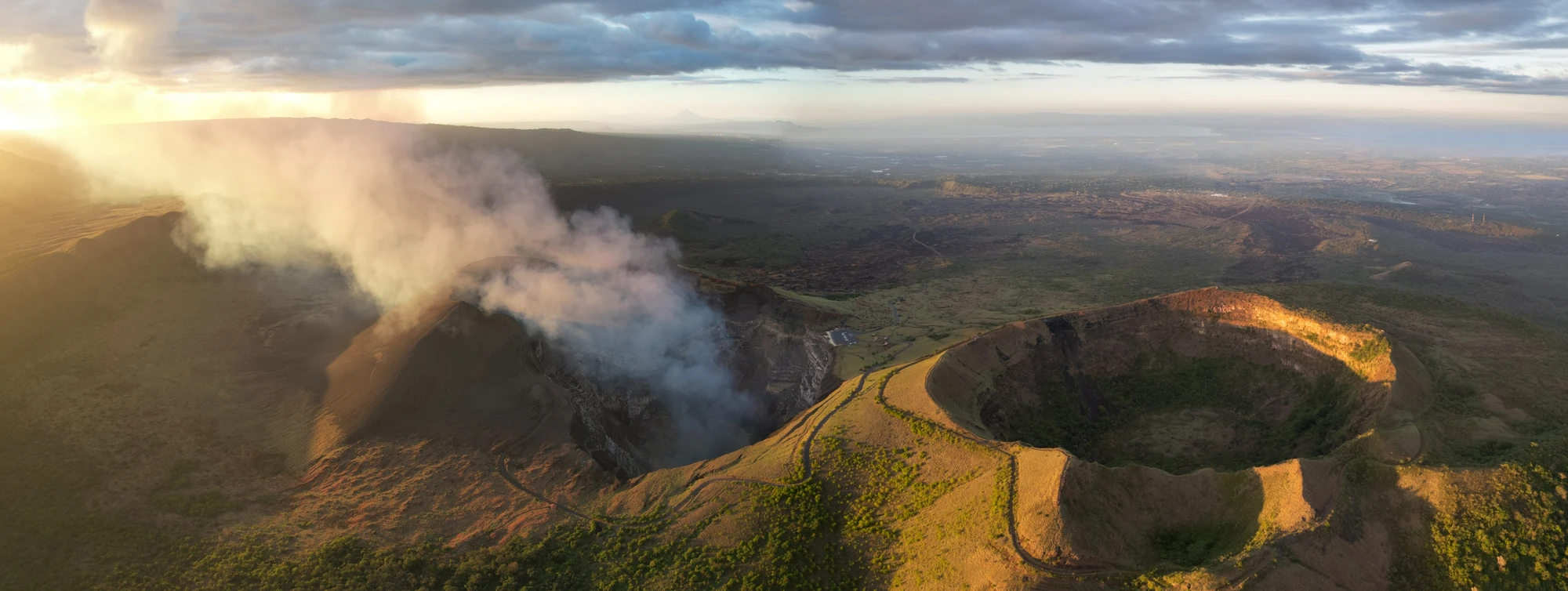
Masaya is compact enough to feel intimate and big enough to unsettle. The paved road rises to the crater lip — one of the few places in the world where visitors can safely drive to the rim of an active volcano. The park’s 54 km² contains two primary cones and five craters; geology here reads like a layered story of eruptions and human attempts to name, tame and explain them. Indigenous people called this place a portal; the Spanish baptized it La Boca del Infierno, “The Mouth of Hell,” and in the 16th century Father Francisco Bobadilla installed La Cruz de Bobadilla on the lip to exorcise the devil. That mixture of myth and hard science is present in every step of a Masaya visit.

Geologically, Masaya sits on the Pacific Ring of Fire and is one of Nicaragua’s most active volcanoes. The Santiago crater is the dramatic centerpiece — deep, steaming and occasionally holding incandescent lava that becomes visible during evening tours. Smaller features like Comalito, often called the “baby volcano,” offer 360-degree viewpoints for sweeping panoramas that include Laguna de Apoyo and the islands of Lake Nicaragua on clear days. The local landscape moves fast between volcanic sand and a surprisingly verdant scrub: birds perch on blackened lava flows and iguanas sun themselves on cooled flows that look like petrified waves.

Masaya is as much cultural destination as natural wonder. The nearby town hums with artisan life; the Masaya Handicraft Market is a colorful, tactile contrast to the volcanic greys. Potters from San Juan de Oriente coax clay into shapes with methods passed down generations. Many day trips combine crater visits with Granada’s colonial streets and a boat ride on Lake Nicaragua — a reminder that this region’s identity is volcanic, lacustrine and colonial all at once.

For travelers, the magnet here is variety. There’s the tight, cinematic drama of a Masaya Volcano Night Tour — five minutes at the rim can feel like a lifetime of photographs. There are day options that pair Masaya with the crater-lake of Laguna de Apoyo, where cooling off in crystal-clear water or paddling in a kayak is a literal contrast to the heat below. Hikers can add a short trek to Comalito for a quieter, panoramic perspective above younger lava flows. And city-focused visitors will appreciate combined itineraries that link Masaya with Granada, Catarina viewpoint and the craft markets.

Practicalities matter here. The park road makes the crater lip accessible by car, but it’s not a place to linger; volcanic gases and sudden activity mean rangers enforce short viewing windows (many operators note only 10 minutes at the lookout during night tours). The site sits roughly 30–45 minutes from Managua by car, and most organized tours include hotel pickup and drop-off. Elevation at the crater is modest — around 600–650 meters — so acclimatization isn’t an issue, but wind and sulfur can make evenings unexpectedly chilly.

Packing and planning tips are straightforward: bring a warm layer for night tours, sturdy closed-toe shoes for walking on uneven lava, and a small filter or N95-style mask if you’re particularly sensitive to fumes. On night photography, a tripod and a wide-aperture lens are essential if you want to capture the lava glow; guides will remind you to keep a safe distance and follow ranger instructions.

Safety is pragmatic here: stay within marked areas, heed park staff and refrain from collecting rocks or disturbing the fragile volcanic crust. Whether you join a large group or book a private Masaya Volcano Night experience, choose operators that emphasize safety and local knowledge — some tours also combine Masaya with stops at the Masaya museum, La Cruz de Bobadilla, or a pottery workshop in San Juan de Oriente for a richer cultural sidebar.

A visit to Masaya is a study in contrasts: the quiet of star-dusted skies, the visceral brightness of molten rock, the human-scale bustle of nearby markets. It’s a reminder that adventure travel can be both immediate and contemplative — standing at the crater’s rim you feel the planet’s processes at a close, almost personal distance. For travelers who want a compact, visceral volcano encounter paired with cultural depth, Masaya delivers an experience that is equal parts natural spectacle and local story.

If you go: opt for the dry months for clearer night skies, bring a headlamp for guiding through the park after dark, and plan to combine the crater visit with a craft market stop or Laguna de Apoyo paddle for a full-spectrum day. Respect the park’s cautions, and you’ll leave with images that are difficult to shake — luminous, quiet and a little wild.
Duration2–6 hours depending on combo tour
Plan your visit

Trail Wisdom

Short but intense lookout windows

Night tours often allow only brief viewing time at the crater rim for safety—arrive early and be ready with your camera settings prepped.

Protect from volcanic gases

If you’re sensitive to fumes, bring an N95 mask and avoid leaning into low-lying gas pockets near fumaroles.

Sturdy shoes for lava terrain

Wear closed-toe shoes with good tread for walking on uneven, sometimes sharp volcanic rock around viewpoints.

Bring a warm layer

Evenings can be markedly cooler at the lip — pack a windbreaker or fleece for night tours.

Local Knowledge

Hidden Gems

  • Hike the Comalito ‘baby volcano’ for quieter 360º views
  • San Juan de Oriente pottery houses where artisans demonstrate ancestral techniques

Wildlife

green iguanas, howler monkeys (seen more often on nearby isletas and lake boat trips)

Conservation Note

The park enforces viewing limits and closed areas to protect visitors from gases and preserve fragile volcanic features; support local guides and don’t remove natural materials.

Spanish chroniclers named Masaya La Boca del Infierno and in the 16th century the cross La Cruz de Bobadilla was placed at the crater lip in an attempt to exorcise what they believed was a supernatural force.

Seasonal Guide

spring

Best for:fewer rains, clear crater views, daytime hiking
Challenges:occasional late rains, dusty trails

March–May bridges dry and rainy seasons—good visibility but afternoon showers begin to increase; mornings remain best for crater views.

summer

Best for:lush landscapes nearby, fewer crowds midweek, kayaking at Laguna de Apoyo
Challenges:regular heavy rains, muddy roads

June–August is wetter; plan crater visits for morning or evening and expect heavy afternoon showers that may affect logistics.

fall

Best for:dramatic skies, fewer tourists, birdwatching
Challenges:peak rainy season, risk of limited visibility

September–November brings frequent rain; views can be dramatic when breaks in cloud occur but plan flexibly.

winter

Best for:clear night skies, night lava viewing, day trips from Managua
Challenges:cooler nights, higher demand for tours

December–February is the optimal dry season with crisp air and reliable viewing conditions for night tours.

Photographer's Notes

Use a tripod and shoot at high ISO with a wide aperture for night lava; bracket exposures for crater glow and use a remote or timer to avoid camera shake. For daytime panoramas, a polarizer cuts glare and enhances sky contrast; seek foreground textures in cooled lava for scale.

What to Bring

N95 or particulate respirator

Essential

Reduces irritation from volcanic gases and ash during close crater viewing.

Sturdy closed-toe shoes

Essential

Protects feet and provides traction on uneven volcanic rock.

Headlamp or small flashlight

Essential

Essential for night tours and returning along park roads after sunset.

○

Light windproof jacket

Keeps you warm on the crater rim where wind and sulfur chill the air.

Common Questions

How long can you stay at the crater rim?

Viewing time is limited for safety and varies by park rules and current activity—night tours commonly allow only about 10 minutes at the closest lookout.

Can I see lava at Masaya?

Yes—during periods of activity incandescent lava can be visible in the Santiago crater, especially on night tours, but visibility depends on volcanic conditions.

Is the Masaya Volcano National Park safe for children?

Children can visit but must be supervised; follow ranger directions and expect limited time at the rim due to gases and safety protocols.

Do I need special permits?

No individual permit is required for typical tourist visits; organized tour operators handle park access and fees.

Can I combine Masaya with other nearby attractions?

Yes—popular combos include Laguna de Apoyo for swimming/kayaking, Granada’s colonial center, Catarina viewpoint and artisan workshops in San Juan de Oriente.

What should I avoid collecting?

Do not remove volcanic rocks, ash or plants—collecting natural materials is prohibited and damages the environment.

What to Pack

Water bottle (stay hydrated in dry heat), closed-toe shoes (protect feet on lava), N95 mask (protect from fumes), headlamp (essential for night tours)

Did You Know

The Spanish gave Masaya the name 'La Boca del Infierno' and the cross La Cruz de Bobadilla was placed on the crater lip in the 16th century; the park covers about 54 km².

Quick Travel Tips

1) Book night tours in advance for best availability; 2) Travel from Managua early evening to avoid traffic; 3) Combine Masaya with Laguna de Apoyo or Granada for a full day; 4) Bring small local currency for park and market purchases.

Local Flavor

Pair your crater visit with Masaya’s handicraft market and a pottery visit in San Juan de Oriente; try vigorón or nacatamal at local stalls to taste the region’s hearty flavors.

Logistics Snapshot

Drive time: 30–45 min from Managua; park fee and ranger access required; night tours offer best lava visibility; brief crater-viewing windows for safety.

Sustainability Note

Stay on marked paths, don’t remove rocks or plants, support local artisans and choose guides who follow park safety and conservation protocols.

Topics