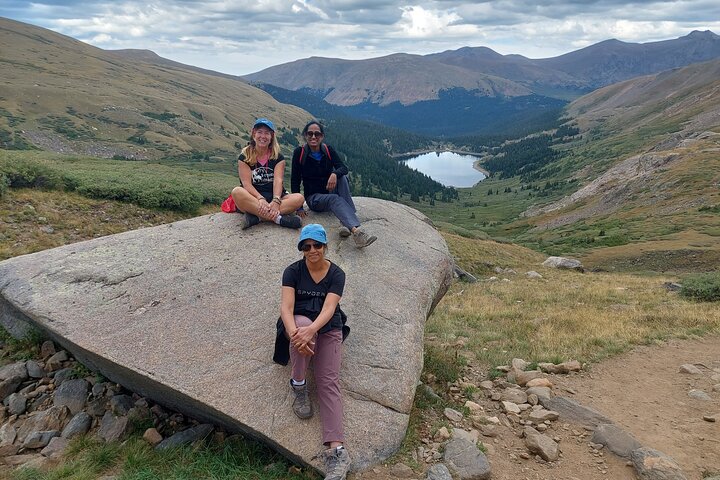
By the time the city fully wakes, Washington Park is already moving. Joggers carve a steady rhythm on the outer loop, dogs circle like clockwork, and a low mist clings to the two lakes—Smith and Grasmere—giving them the look of old mirrors catching a new light. Walk past the formal flower beds before the crowds and you’ll find the place breathes like a neighborhood: deliberate, well-tended, and quietly social. This is Denver’s living room, a green rectangle long enough to host tempo runs, picnics, and moments of quiet reflection without ever feeling crowded.
Set in the heart of one of Denver’s most desirable neighborhoods, Washington Park invites a rare urban intimacy. Its paths curve and flatten, offering an approachable loop that’s both a training ground for runners and a sunday-stroll landscape for families. The park’s two lakes are lined with paths that reflect a skyline of cottonwoods and elms; the lake edges push back against the city’s grid, asking you to slow down and notice. In spring, the rose beds bloom with regimented color, and in winter, the park’s small hills become a magnet for sleds and bundled laughter.
History and design are stitched into the park’s bones. Established in the late 19th century and later refined as Denver expanded, Washington Park was designed to be an escape from the grid—a pastoral counterpoint that still retains traces of its original formal layout. The park’s mix of open lawns, flower gardens, and lakes suits a city that prides itself on access to outdoor life. The surrounding neighborhood grew up as an extension of that idea: tree-lined streets, bungalow homes, and a cafe culture that rewards early mornings and late afternoons.
Geologically, you feel the Front Range more than see it. The park sits on the high plains at Denver’s elevation—around 5,280 feet—so the air is crisper and drier than sea-level parks. That elevation shows up subtly: uphill intervals feel firmer, hydration feels less abundant, and the sun can shift from friendly to unforgiving within minutes. Vegetation here is urban-adapted—elms, cottonwoods, and an assortment of curated flower beds—rather than alpine, but the park’s relationship to Colorado’s broader landscape is clear in the light and the sky.
Washington Park is built for movement. The classic route is the outer loop: roughly 2.6 miles paved and mostly flat, with sections of crushed gravel that soften impact. It’s ideal for tempo runs, bike rides with kids, or an efficient morning walk. Inside that loop, you’ll find quieter trails, small lawns for tossing a frisbee, tennis courts, and the botanical accents—the formal beds and the rose plantings that draw neighborhood gardeners and photographers alike. Waterfowl—ducks and geese—run the lakes in the warmer months, while raptors sometimes cruise overhead, reminding you that even urban parks have a wild adjacency.
Practical side: Washington Park is an every-season park. Spring is showy, summer hosts long golden evenings, fall dresses the trees in ochre, and winter turns the hum of activity into a different kind of play—think brisk walks and sledding on the steeper knolls. Come prepared: layers for shifting temperatures, sun protection, and a small daypack if you’re planning longer time in the park. If you’re training, use the measured loop to pace interval workouts—locals time 400- and 800-meter repeats on the straighter stretches and save the inner paths for cooldown.
For families, the approach is casual and generous. Bring a blanket, a picnic, and a ball. For people training, think about surface transitions—paved to gravel—and shoes that handle both. Cyclists should be courteous on shared paths; the loop can get congested at peak hours (7–9 a.m. and 5–7 p.m.). Dog owners will appreciate the social energy of off-leash moments in permitted areas; observe posted leash rules and carry waste bags.
Getting there is straightforward. The park is walkable from many nearby neighborhoods; if you’re driving, a handful of on-street spaces and small lots surround the perimeter. Public transit options connect the area to downtown, and biking is often the fastest way to get across town, given Denver’s bike-friendly streets.
Why go? Washington Park isn’t a destination because it’s grand or remote—it’s beloved because it’s dependable. You’ll find people training for races, grandparents feeding ducks, toddlers testing the playground, and couples pacing for conversation. It’s a park that serves as both backdrop and anchor to daily life in Denver. If you want a single outdoor experience that feels like the city’s porch, Washington Park is it.
When to arrive: early morning for light and space; late afternoon for golden hour reflections on the lakes. Where to focus: do the outer loop to get a precise training metric, then crisscross the inner network for quieter views and the rose beds. What to leave with: a clearer sense of the city’s rhythm, and maybe a plan to come back tomorrow.
The park is simple to love because it’s useful: for the commuter who runs, the parent who wants green space, and the traveler who needs a low-fuss place to reset between Denver’s museums and mountain excursions. It’s urban, human-sized, and quietly excellent—an essential stop for anyone who wants to understand how Denver lives outdoors.