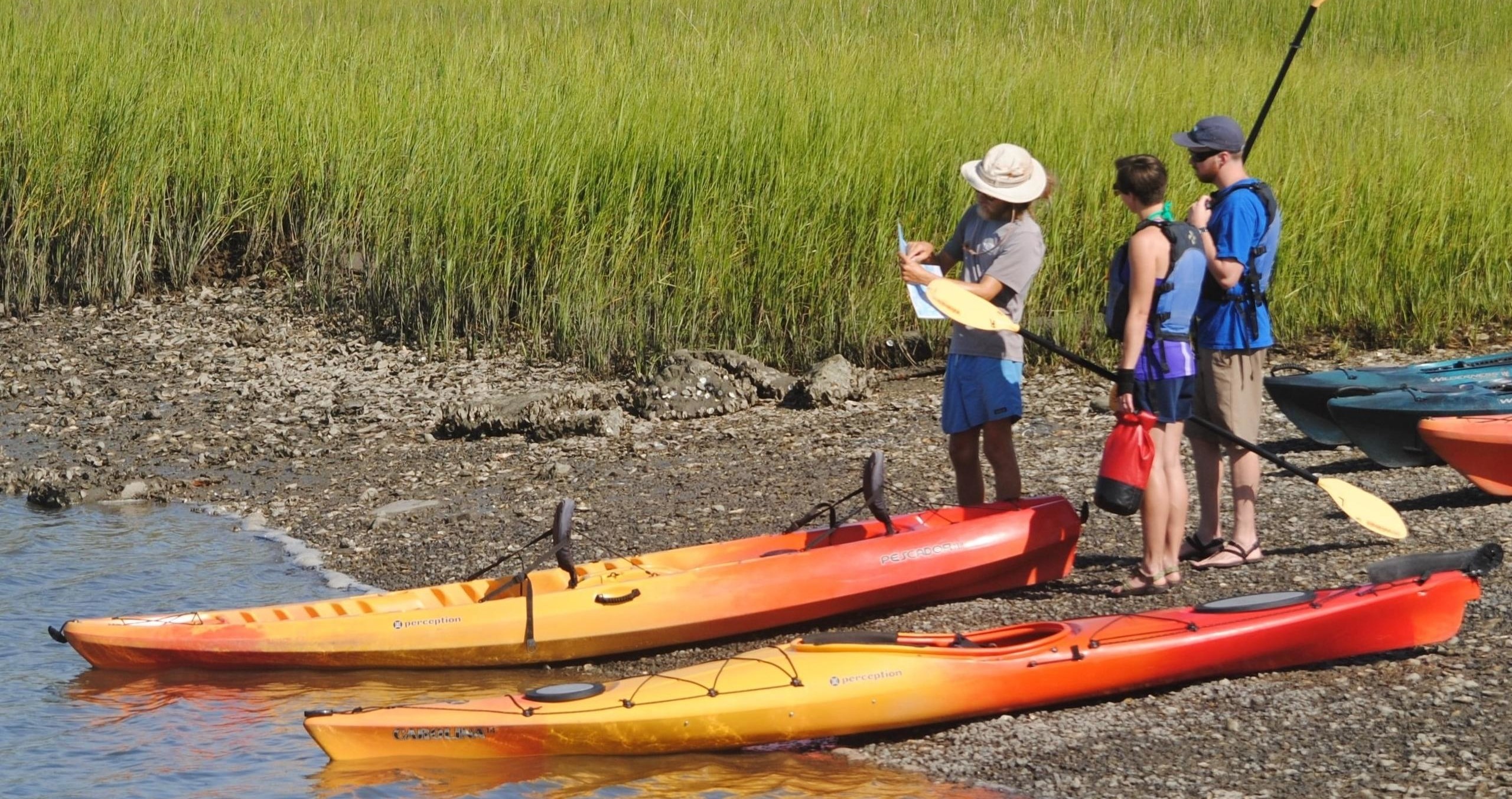
The Folly River wakes up with a soft hiss. Dawn feels like a promise here—light sliding across the spartina, the marsh breathing as the tide turns, and a skiff easing off the dock with the quiet confidence of a local. You settle into cushioned seats under a wide T-top, the kind of shade that tells you this boat was built by people who understand Southern sun. The motor hums low. Gulls stir. And then the river speaks up: a sleek gray back breaks the surface beside you, a flick of dorsal fin, a puff of breath. The dolphin looks as if it decided you’re worth a once-over—and then slips beneath the skin of the water like a secret.
This 1.5-hour Dolphin Cruise is Folly Beach at its most honest: unhurried, salt-forward, and tuned to the rhythm of the tide. You’ll glide through a maze of creeks and broad marsh channels where bottlenose dolphins draft the current, pelicans patrol the sky, and oysters stitch the shoreline together, quietly filtering the water. The river dares you to slow down. The tide insists. Here, the landscape is not just scenery—it’s choreography. Currents push forward. Wind shifts the conversation. And you learn quickly that the best way to see dolphins is to move like water: patient, observant, ready.
Folly Beach sits on a ribbon of barrier island south of Charleston, a place built and rebuilt by storms, longshore drift, and the daily tug-of-war between river and sea. The salt marsh—the cradle for so much of the Atlantic’s marine life—fans out behind the island like a living atlas. Look north and, on clear days, you might catch the slender silhouette of the Morris Island Lighthouse, a Civil War-era sentinel now marooned by erosion. This is Lowcountry, shaped by hurricanes and harvests, shrimp boats and sea islands. It’s also where bottlenose dolphins practice a rare behavior called strand feeding, corralling schools of fish onto exposed banks. While you should never pressure dolphins to perform—you’ll keep a respectful distance—it’s thrilling simply to be in their neighborhood when the tide swings in their favor.
Your captain reads the current like a newspaper. On falling tides, dolphins are often bolder, noses arrowing into creek mouths flushed with baitfish. On dead-calm mornings, you can hear them exhale. The boat’s quiet tempo keeps conversations low and eyes scanning. This is wildlife watching done right, with the boat acting like a considerate guest.
Comfort and logistics matter on the water, and this crew has thought it through: there’s ample shade under the T-top, cushioned benches to settle in, and just enough speed to cover ground without losing the texture of the place. There’s no restroom onboard—another good reason to arrive prepared. Bring polarized sunglasses to cut glare; the marsh’s greens stand taller and dolphin backs resolve from shine to detail when the surface is tamed. A light wind layer helps, especially outside of mid-summer, because the river likes to keep its own microclimate.
Charleston, a short drive away, offers plenty of hospitality, but Folly has its own pulse—board shorts and flip-flops, fish tacos and surf checks, an island that still feels like a beach town. If you want a deeper dive into the natural history of the marsh—oyster reef dynamics, shorebird migrations, dolphin behavior—connect with knowledgeable local experts before you go. They’ll help you target the best tide windows and understand what you’re seeing beyond the obvious. Think of this cruise as your welcome mat to the water.
The geology under your hull is a slow-motion story. Spartina alterniflora anchors the mud. Oyster reefs grow like barricades, breaking wave energy, creating nurseries for shrimp and drum. Every incoming tide writes a fresh preface across the flats, and every outgoing tide edits it back. Humans have always lived with that cadence here—from Indigenous communities who fished these creeks, to Gullah Geechee traditions that carried the marrow of West African coastal life into Lowcountry culture. The river remembers, and it’s generous with its memory if you look closely.
What seals the day is the feeling of scale. Dolphins roll close enough to hear the rush of air; great blue herons stand like critical observers; and far off, the Atlantic banks its breath against the sandbars. The boat becomes a small living room in the marsh, a place where families point and whisper, where kids learn to track a fin by the angle of a ripple. There’s nothing performative about it. This is simply a good way to spend time—outside, together, learning the grammar of a landscape that rewards patience.
Practicalities are straightforward. Trips last 1.5 hours. Expect gentle conditions inside the marsh, but if you’re sensitive to motion, sit near the centerline and keep your eyes on the horizon. Wear reef-safe, non-aerosol sunscreen—it protects the boat and the water. Hydrate before you board and bring water in a reusable bottle. For timing, aim for early morning or late afternoon when the light is soft and the wind calmer; both windows are excellent for photography and often active for wildlife. If your schedule is flexible, ask your captain about the tide—it’s the metronome of this ecosystem, and dolphins dance to it.
Photographers should plan for movement: use a fast shutter and continuous autofocus to freeze a breach or tail slap. If you’re after portraits—of family, pelicans, or the lighthouse—anchor compositions with the clean lines of the marsh. Keep a dry bag handy; a boat has ways of reminding you where you are. Want more local intel or to string this cruise into a longer Lowcountry itinerary? The region’s best insights live with seasoned Charleston and Folly Beach guides who know how to pair tides, timing, and temperament.
In the end, the Folly River wins you over because it doesn’t try. It carries you, nudges you toward the next bend, and tells you when it’s time to idle and listen. The dolphins do the rest—appearing when they choose, reminding you that wild places have their own schedule. Step off the boat with hair a little saltier, eyes a little sharper, and the sense that you’ve just learned the first words of a language worth practicing. And if you’re not quite done, ask those same local experts about sunset departures. The marsh glows, the wind softens, and the river, satisfied, settles back into itself.