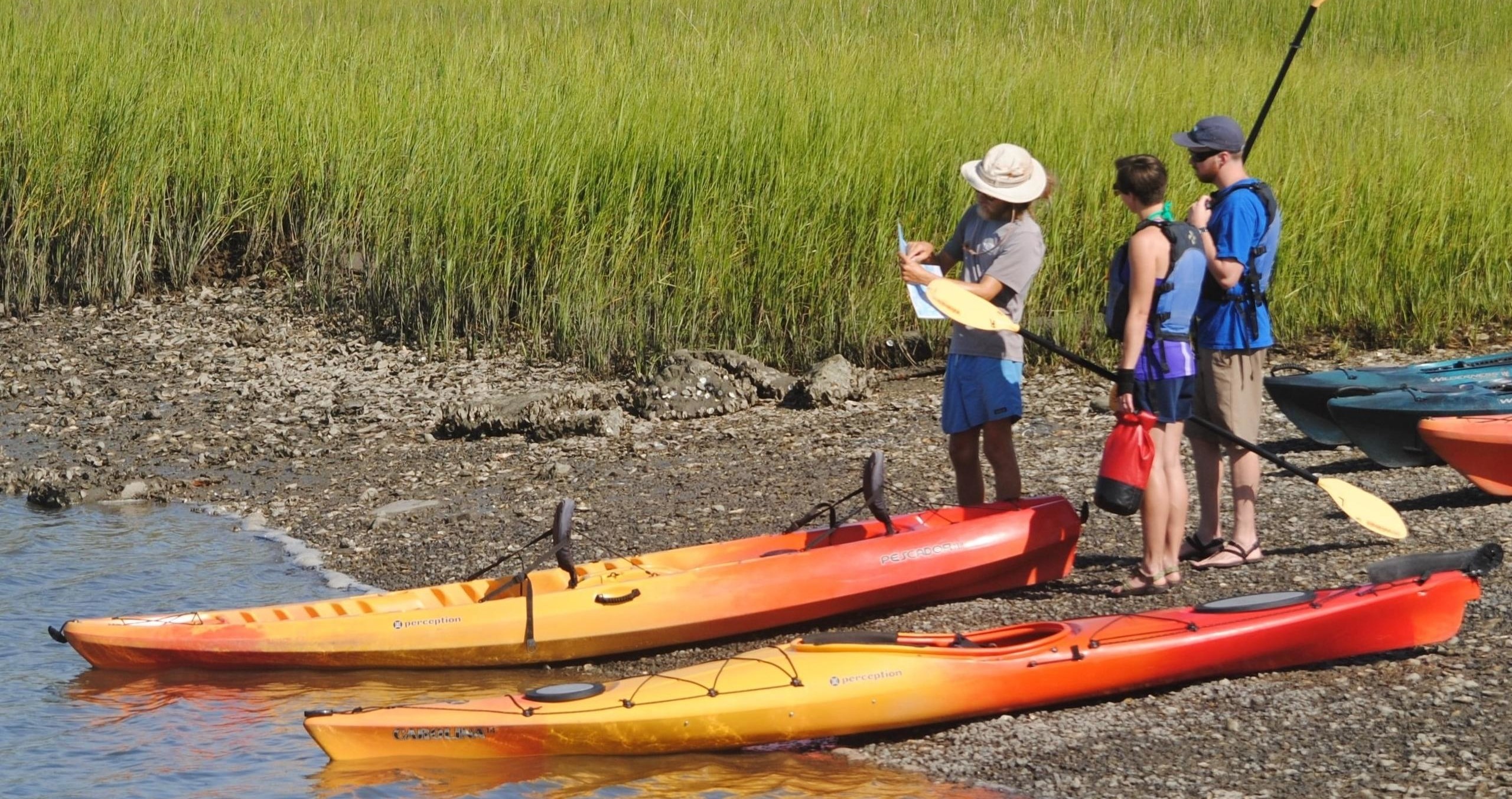
The marsh wakes up before the beach does. In the first quiet hour, when the wind is still undecided and the light slips gold across the spartina, you wheel a board down Center Street toward the Folly River. Egrets post up like sentries in the shallows. Somewhere out of sight, a dolphin exhales—soft, certain—and the river answers with a ripple that runs the length of the creek. This is Folly at its most honest: salt on the air, a hint of oyster in the breeze, and time measured by the tide.
A two-hour spin on a stand-up paddleboard here is less a workout than a conversation with the Lowcountry. Push off from the public launch and the current feels it first—testing your balance, inviting you to settle into a rhythm. The board steadies, knees loosen, and the paddle finds that easy cadence that can carry you for miles. Morning is your ally on this water. Winds nap, boat traffic is light, and the river, mercifully, minds its manners.
The beauty of a simple rental is freedom: you choose your pace, your path, your pauses. From the launch, angle upriver along the marsh edge toward Oak Island Creek at a rising tide; hug the grass for lee from the breeze and the chance to spot herons stalking, mullet jumping, and fiddler crabs waving their outsized claws like tiny flagmen. Or drift toward the bridge and bend south, where the river opens wider and the horizon hints at the Atlantic. Mid-paddle, you might hear that signature whoosh and see a fin arc beside you. Bottlenose dolphins work these waters daily. When they do, slow down. Let them write the script. You’re a guest in their lane.
Geologically, Folly is a lesson in motion. Barrier islands don’t sit still; they migrate under the slow push-and-pull of tides and storms. That’s why the Morris Island Lighthouse, built in 1876 to guide ships into Charleston Harbor, now stands marooned offshore—erosion stole the land out from beneath it, leaving a brick sentinel in the surf. The salt marsh you’re gliding past is one of the most productive ecosystems on Earth, its spartina grass feeding a food web that runs from periwinkle snails to the sea turtles that slip past the jetties. Every oyster reef you see is a fortress that calms waves and filters water by the gallon. Respect those living breakwaters; they’re beautiful, sharp, and critical to this place.
History here is never far from the surface. Folly’s name likely stems from an old English word for dense foliage, and during the Civil War, Union troops used the island as a base to stage assaults on nearby Fort Wagner. Paddling the river, you’re skimming a corridor that has been trade route, lifeline, and refuge long before sunscreen and dry bags were a thing. The human story and the natural one are intertwined, and on a stand-up board you take them in at three miles an hour—the right speed to notice details.
The logistics are intentionally simple. Rentals begin at 10 a.m. daily, but show up early to beat the beach traffic and the wind. You’ll get a board, paddle, PFD, leash, and a phone case (one per group), plus a quick refresher via an instruction video before you roll a SUP cart to the public launch. That small bit of ground school is more than courtesy—it’s your confidence check. If you’ve never paddled before, consider a guided session first; The Folly River is tidal, and while it looks gentle, the current can sneak up if you’re not planning with it.
Two hours is plenty to cruise a mellow three to four miles, depending on tide and wind. Aim for slack tide if possible—the brief window around high or low tide when the river relaxes. If you’re paddling near peak ebb or flood, keep a shoreline in reach and know your exit points. Boat wakes roll through occasionally; drop to a low stance or a knee to steady, then rise and continue. Sun protection is essential; this water reflects light like a mirror. Water shoes earn their keep when stepping near shells or oysters. And bring that water bottle—salty air is a stealthy dehydrator.
What you’ll feel out here is a kind of quiet agency. The river nudges, the breeze negotiates, the birds keep score. Paddling gives you time to listen—to the crossing calls of ospreys, to the rapid chuckle of a clapper rail hidden in the reeds, to your own breath as it syncs with the dip of the blade. On a good day, you’ll finish not just with tired shoulders but with a map of the marsh sketched into memory: that bend where the dolphin surfaced; that patch of grass where the wind eased; that long, smooth glide with nothing to do but move forward.
If you’re traveling for the story, Folly rewards the curious. After your paddle, walk to Folly River Park and watch the sunset stain the water copper. Scan the far horizon for the ghostly silhouette of the Morris Island Lighthouse. And if you need a nudge to commit, this is it: book the Folly River two-hour private SUP rental, time it with the tide, and see how the Lowcountry moves when you move with it.
Planning-wise, it’s hard to overcomplicate this one. Wear a swimsuit, slather reef-safe sunscreen, pack a hat and polarized sunglasses with a retainer, and clip your phone into the provided case. Check tides before you leave. Hydrate, then hydrate again. And when the morning calm arrives, answer it. Each stroke becomes a small agreement between you and the river: I’ll lean in; you’ll carry me.
Ready to go? Lock in your spot for a Charleston SUP rental on the Folly River and slide into the day the way locals do—feet wet, shoulders loose, salt in your hair, and the marsh quietly cheering you on.
For more details or to reserve, explore the official listing here: paddle boarding on Folly River.